Interdisciplinary Research Project · 2025

AI Productivity & Project Tiger

A dual research journey — from the frontier of artificial intelligence reshaping how we work,
to one of India's most celebrated wildlife conservation triumphs.

Scroll to explore
Part I

AI-Powered
Productivity Tools

Market Landscape, Emerging Technologies & Opportunities — 2025

A Market Exploding
with Potential

The global AI productivity tools market stood at approximately $13.8 billion in 2025 and is on a trajectory to reach $137 billion by 2035 — a compound annual growth rate of nearly 26%. This explosive expansion is being driven by the widespread integration of machine learning, generative AI, and natural language processing into everyday business workflows.

Cloud-based deployment dominates with roughly 65% market share, while subscription-based revenue models account for 55% of all revenue. Usage-based pricing is emerging as the fastest-growing model, signalling a shift toward democratised, pay-as-you-go AI access.

North America leads adoption, but Asia-Pacific is the fastest-growing region — driven by government-backed digital transformation initiatives and a rapidly expanding tech-savvy workforce.

$13.8B Market Size 2025
$137B Projected by 2035
25.8% CAGR 2025–2035
65% Cloud Deployment Share

Market Size Projection (USD Billion)

$8.8B
2024
$13.8B
2025
$20B
2026
$32B
2028
$55B
2030
$95B
2033
$137B
2035

Top Competitors & Players

M

Microsoft

Copilot integrated across Office 365, Teams, and Azure. 400M+ paid users. 70% of Fortune 500 companies use it.

Enterprise Leader
G

Google

Gemini AI embedded in Workspace. 1 billion monthly active users in 2025. Dominant in collaboration and analytics.

Collaboration Giant
O

OpenAI

ChatGPT and GPT-4o powering enterprise workflows, coding, content creation, and customer support at scale.

AI Frontier
N

Notion Labs

AI-native workspace combining notes, databases, and project management with embedded generative AI features.

Knowledge Work
S

Salesforce

Einstein AI and Agentforce transforming CRM, sales automation, and customer service with agentic AI workflows.

CRM + Agents
Gr

Grammarly

Acquired Superhuman in 2025 to expand into AI-powered email. $1B backed, $35M revenue from Superhuman alone.

Communication AI

Market Share by Tool Type (2025)

Tool Types
Data Analytics — 31%
Collaboration Tools — 22%
Code Generation — 18%
Content Creation — 15%
Other Tools — 14%

Technologies Reshaping
How We Work

Agentic AI & Autonomous Workflows

AI agents that independently plan, execute, and iterate on multi-step tasks — from research to code deployment — without constant human prompting. Salesforce Agentforce and Microsoft Copilot Agents lead this wave.

Multimodal AI Assistants

Tools combining text, voice, image, and video understanding in a single interface. Users can speak, sketch, or show — and the AI responds intelligently across all modalities simultaneously.

AI Code Generation

The fastest-growing tool category by CAGR. GitHub Copilot, Cursor, and similar tools now write, review, and debug code — reducing developer time on boilerplate by up to 55%.

AI Meeting Intelligence

Real-time transcription, automated task assignment, and meeting summaries. Companies using these tools report 30% reduction in meeting preparation time and significantly higher follow-through on action items.

Predictive Analytics & Decision Intelligence

ML engines that analyse historical data to forecast outcomes, prioritise tasks, and recommend actions — transforming reactive workflows into proactive, data-driven operations.

What Users
Struggle With

Tool Fragmentation

Workers juggle 8–12 different apps daily. Context-switching kills deep work and creates data silos.

🔒
Data Privacy & Security

Enterprises fear feeding sensitive data into third-party AI models. Compliance with GDPR and sector regulations remains a major blocker.

📉
AI Hallucinations & Trust

Inaccurate AI outputs erode user trust. Workers spend significant time fact-checking AI-generated content.

🎓
Steep Learning Curves

Many powerful AI tools require prompt engineering expertise that most knowledge workers don't have.

Where Differentiation
Lives

01
Vertical-Specific AI

Healthcare, legal, and finance sectors need domain-trained models with built-in compliance. Fastest-growing verticals by CAGR.

02
On-Device / Private AI

Tools that run locally or in private clouds address enterprise security concerns — a massive underserved market.

03
Usage-Based Pricing

The fastest-growing revenue model. SMBs and freelancers want to pay only for what they use — not flat enterprise subscriptions.

04
Asia-Pacific Expansion

Fastest-growing region globally. Localised AI tools in Japanese, Hindi, and Southeast Asian languages remain largely untapped.

Summary: AI Productivity in 2025

📈

The market is growing at ~26% CAGR, from $13.8B today to $137B by 2035 — one of the fastest-expanding tech sectors globally.

🤖

Agentic AI is the defining trend — tools that act autonomously on behalf of users are replacing simple chatbots and copilots.

🏆

Microsoft and Google dominate with embedded AI in existing suites, but vertical-specific startups have significant room to disrupt.

🌏

Asia-Pacific is the fastest-growing region, with government-backed digital transformation creating massive demand for localised AI tools.

🔑

The biggest differentiation opportunity lies in privacy-first, domain-specific AI with usage-based pricing — addressing the top three user pain points simultaneously.

🐯 Part II
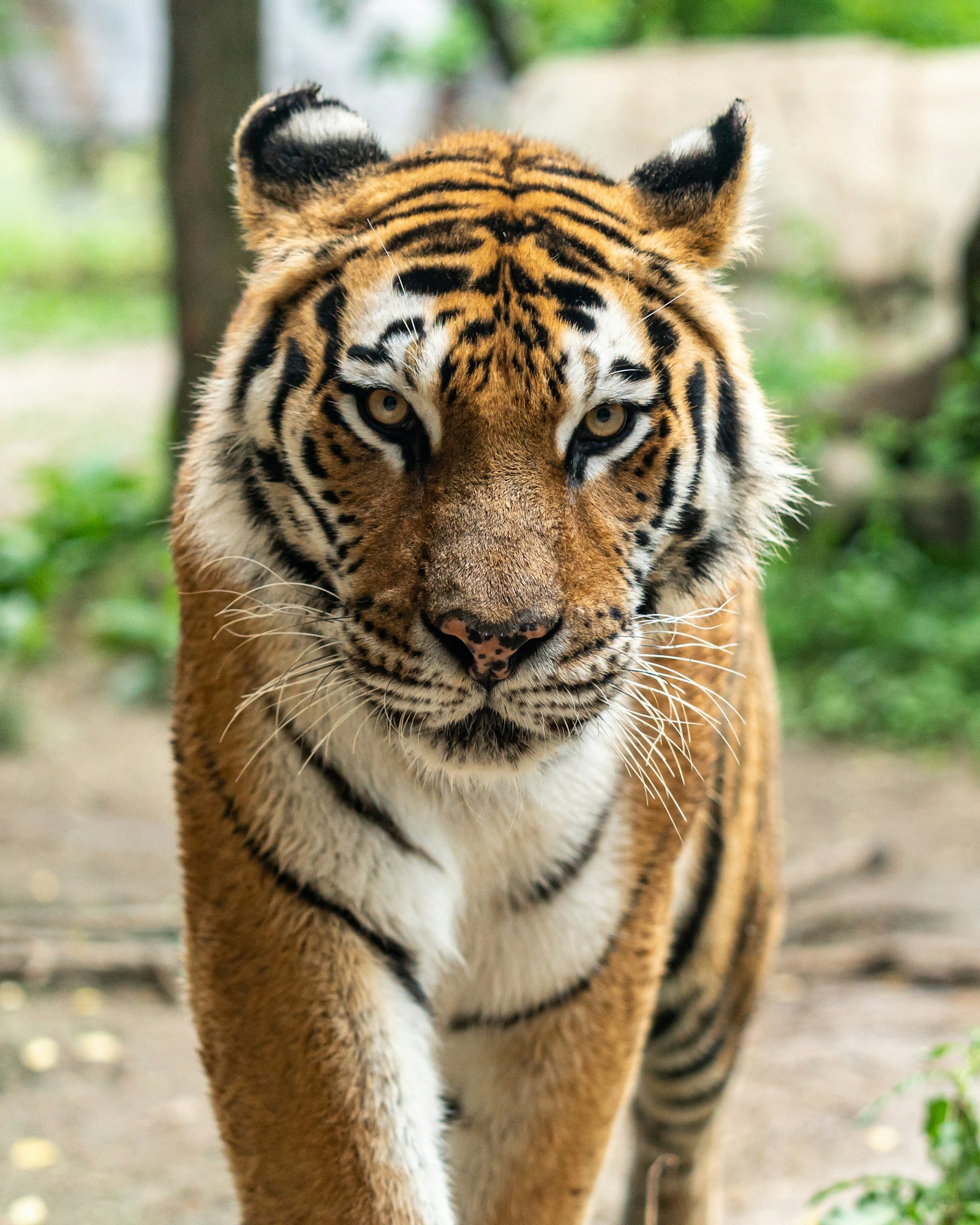
Bengal Tiger in the wild
Part II

Project Tiger

India's Landmark Conservation Journey — 1973 to Present

"To ensure the maintenance of a viable population of the tiger in India, for the benefit, education and enjoyment of future generations." — Official Mandate, Project Tiger, 1973

A Species on the
Brink of Extinction

At the close of the 19th century, India was home to an estimated 40,000 tigers. By the early 1970s, that number had collapsed to a devastating 1,827 individuals — a decline of over 95% in less than a century. Rampant hunting, habitat destruction from agricultural expansion, and the loss of prey species had pushed the Bengal tiger to the edge of extinction.

The Indian Board of Wildlife, alarmed by census data, formed a special task force to assess the crisis. Their findings were unambiguous: without immediate, structured intervention, the tiger would vanish from India's forests within a generation.

On 1 April 1973, Prime Minister Indira Gandhi's government launched Project Tiger under the Ministry of Environment, Forest and Climate Change. The formal inauguration took place at the forest rest house of Dhikala in Jim Corbett National Park, Uttarakhand — with Kailash Sankhala appointed as the project's first director. The initiative was backed by WWF India and the IUCN, marking India's entry into the global conservation movement.

Initially conceived as a six-year pilot (1973–1979), Project Tiger was extended and expanded as its early results proved transformative. Nine tiger reserves were designated in the first phase, each selected to represent a distinct ecological landscape.

1900s ~40,000 tigers in India
1952 Indian Board of Wildlife established
1972 Wildlife Protection Act enacted; tiger count: 1,827
1 Apr 1973 Project Tiger officially launched at Corbett NP
2005 NTCA (National Tiger Conservation Authority) established
2023 50 years of Project Tiger celebrated
2025 58 tiger reserves across 18 states

The Five Pillars of
Project Tiger

01
🐅

Viable Tiger Population

Maintain a self-sustaining wild tiger population across India's diverse ecosystems — ensuring genetic diversity and long-term species survival.

02
🌿

Habitat Protection

Protect and restore ecologically critical forest habitats — the core zones where human activity is strictly prohibited to allow undisturbed wildlife movement.

03
🦋

Biodiversity Preservation

Conserve the full spectrum of flora and fauna within tiger landscapes — recognising that protecting the tiger protects entire ecosystems and hundreds of other species.

04
🔬

Scientific Wildlife Management

Promote evidence-based conservation through regular tiger censuses (every four years), camera trap surveys, and data-driven habitat management strategies.

05
🤝

Community Integration

Mitigate human-wildlife conflict through buffer zone strategies that allow sustainable community use of forest resources while protecting core tiger habitats.

The Core-Buffer Strategy

Buffer Zone Sustainable community use, eco-tourism, limited forestry
Core Zone National Park / Sanctuary — strictly protected, no human activity
🐅

Key Tiger Reserves
Across India

As of March 2025, 58 tiger reserves span 18 states, covering approximately 2.23% of India's total landmass. Below are the most significant reserves — including the original nine designated at launch.

Original 1973

Jim Corbett NP

Uttarakhand

India's oldest national park and the birthplace of Project Tiger. Dense sal forests and grasslands along the Ramganga river.

Original 1973

Ranthambore NP

Rajasthan

Famous for tigers seen in daylight near ancient ruins. One of India's most photographed tiger habitats.

Original 1973

Bandipur NP

Karnataka

Part of the Nilgiri Biosphere Reserve — the largest protected area in South Asia, shared with Nagarhole and Mudumalai.

Original 1973

Sundarbans NP

West Bengal

The world's largest mangrove forest and home to the unique swimming tigers. A UNESCO World Heritage Site.

Original 1973

Manas NP

Assam

A UNESCO World Heritage Site at the foothills of the Himalayas, home to tigers, elephants, and the rare golden langur.

Pench TR

Madhya Pradesh / Maharashtra

Inspiration for Rudyard Kipling's The Jungle Book. Currently home to ~83 tigers after successful reintroduction.

Kaziranga NP

Assam

UNESCO World Heritage Site famous for one-horned rhinos. Also hosts a significant tiger population in its floodplain grasslands.

Nagarhole NP

Karnataka

Part of the Nilgiri Biosphere. Dense deciduous forests with one of the highest tiger densities in India.

58 Tiger Reserves
18 States Covered
2.23% of India's Landmass
14 Internationally Accredited

A Conservation
Success Story

Tiger Population Growth in India

268
1973
1,827
1972*
3,015
1979
4,334
1989
1,411
2006
2,967
2018
3,682
2022

*1972 figure represents pre-project baseline. 2006 dip reflects improved census methodology (camera traps replacing pugmark counting).

🌳 Ecological Benefits

  • Tiger reserves act as carbon sinks, sequestering millions of tonnes of CO₂ annually
  • Protection of watershed forests ensures freshwater supply for millions of people downstream
  • Prey species populations (deer, wild boar) have recovered, restoring trophic balance
  • Over 1,000 plant species and hundreds of bird, reptile, and mammal species benefit from tiger reserve protection

🌍 Global Significance

  • Recognised as one of the world's most successful large-mammal conservation programmes
  • The Core-Buffer model has been adopted internationally as a template for wildlife reserve management
  • India's 2022 census of 3,682 tigers represents a 13.5× increase from the 268 counted at project launch
  • Celebrated its 50th anniversary in 2023 with a commemorative event inaugurated by the Prime Minister in Mysuru

India's Share of Global Wild Tiger Population (2022)

75% India
India — 3,682 tigers (75%)
Rest of World — ~1,200 tigers (25%)

Reflections on
Wildlife Conservation

Project Tiger stands as one of humanity's most compelling demonstrations that extinction is not inevitable. When a nation commits — with policy, science, funding, and community partnership — to protecting a species, the results can be extraordinary. From 268 tigers in 1973 to 3,682 in 2022, India has achieved what many conservationists once thought impossible.

Yet the story is not without complexity. The 2006 census dip to 1,411 tigers revealed that pugmark-based counting had been systematically overestimating populations for decades. The shift to camera-trap methodology brought scientific rigour — and a sobering reality check — before the genuine recovery that followed. This teaches us that honest measurement is as important as ambitious goals.

The ecological benefits extend far beyond the tiger itself. Every protected forest is a watershed, a carbon sink, a biodiversity hotspot, and a source of livelihood for surrounding communities. The tiger, as an apex predator, is what ecologists call an umbrella species — protect it, and you protect an entire ecosystem.

As we face accelerating climate change and biodiversity loss globally, Project Tiger offers a powerful model: long-term commitment, scientific management, community inclusion, and political will. The challenge now is to expand this model — to protect corridors between reserves, to address human-wildlife conflict with empathy, and to ensure that the next 50 years of Project Tiger are as transformative as the first.

"The tiger is a large-hearted gentleman with boundless courage and that when he is exterminated — as exterminated he will be unless public opinion rallies to his support — India will be the poorer by having lost the finest of her fauna." — Jim Corbett, naturalist and conservationist